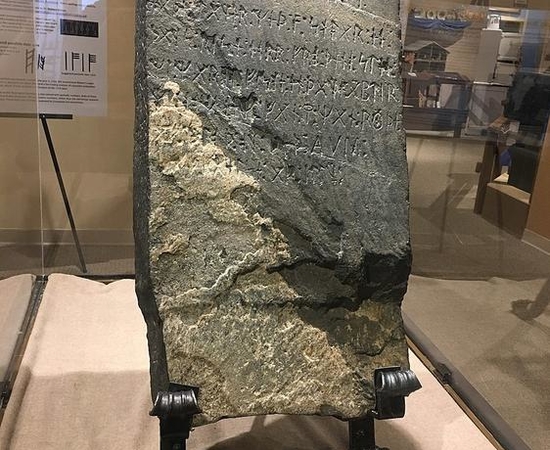
In an era where conspiracy theories get national attention, disinformation spreads on social media, and some politicians trade on a mythologized version of America’s past, it’s fascinating to look back at a hoax that captured many imaginations at the turn of the 20th century: the Kensington Runestone. The Runestone was “discovered” in 1898 and purportedly told the story of Viking missionaries who traveled to Minnesota in 1362, more than a century before other Europeans reached this continent. In this IAS Thursdays talk from October 2015, David M. Krueger, author of Myths of the Rune Stone: Viking Martyrs and the Birthplace of America, discusses the ways in which different groups of Minnesotans found meaning in this myth. Many insisted that the stone was authentic long after the story was debunked. Their reasons for persisting in this belief, Krueger argues, reveal cultural fault lines that are still with us today.
Photo credit: Mauricio Valle